Fashion
The 12-Piece Autumn Capsule Wardrobe
Written by Clara Bennett, Fashion & Home Editor
Last updated Jul 14, 2026 10 min read
Quick Summary
Choose one neutral base (camel, cream or grey), add two knits, two trousers, one denim, one dress, a trench, and three pairs of shoes. Everything must work with everything else.
Introduction
A capsule wardrobe is not about owning less for its own sake. It is about owning pieces that combine, so that getting dressed stops being a decision and becomes a default. Autumn is the easiest season to build one for, because the layering is predictable: a base, a knit, a coat and a boot, repeated with variations. Twelve pieces genuinely produces more than thirty outfits, but only if you make one decision properly at the start — the colour base. Most failed capsules fail there, not at the shopping stage. This guide walks through choosing that base, the exact twelve pieces worth buying, how to audit what you already own before spending anything, thirty outfit formulas built from the list, and how to refresh the whole thing each season without replacing it.
Pick a single colour base first
A capsule works because every piece combines with every other piece, and that only happens when you commit to one neutral family. Camel, cream and warm greige sit together; charcoal, black and cool grey sit together; mixing the two families is what leaves you with pieces that only pair with one other thing.
Choose the family that suits your colouring and, more practically, the one already dominant in your wardrobe. If two thirds of what you own is warm, do not start a cool capsule — you will be replacing everything rather than building on it.
Then allow yourself at most two accent colours. Autumn accents that work across both neutral families include deep burgundy, forest green and rust. Any more than two and you start creating orphan pieces that only work in one combination.
The twelve pieces
This is the list our editors return to every autumn. Adjust the formality up or down for your own life, but keep the proportions: one coat you wear daily, one you wear when it is cold, three knits, three bottoms, one dress and three shoes.
Outerwear (2)
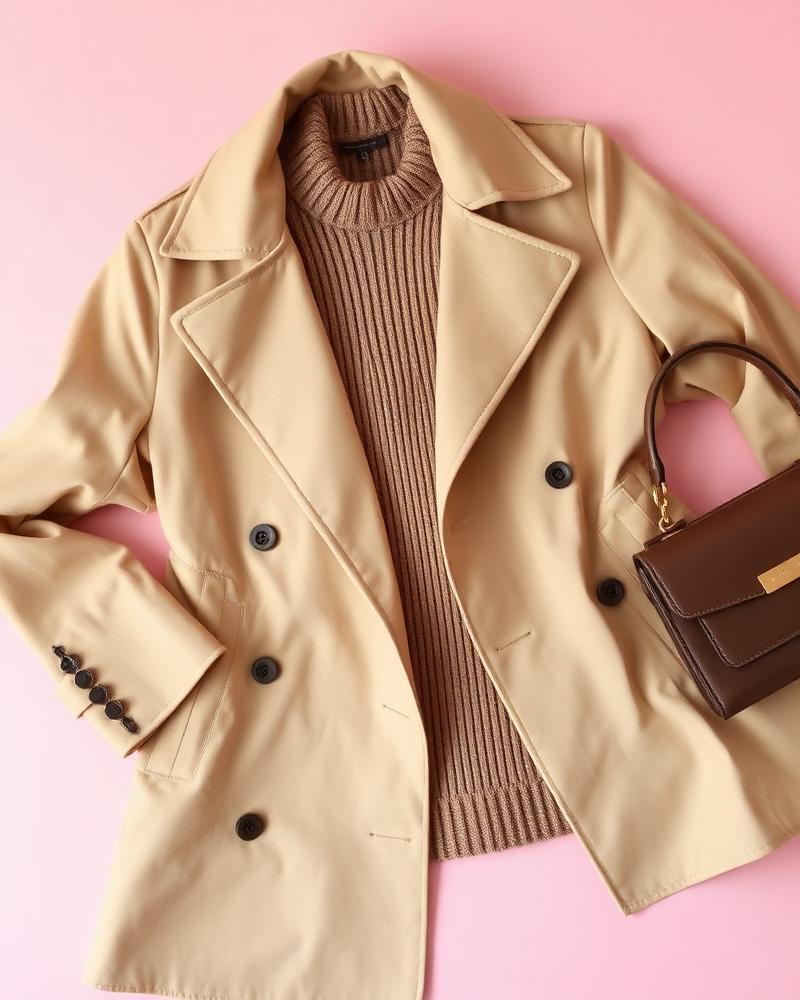
A trench coat in your base neutral, which carries you from September through to the first cold snap, and a wool coat for the second half of the season. Buy the best you can afford here — both appear in almost every outfit you will wear outdoors.
Knitwear (3)
Two fine-gauge knits that layer under a coat without bulk, in your base neutral and one accent, plus one chunky knit for weekends. Fine gauge does far more work than chunky, so weight your budget accordingly.
Bottoms (3)
Straight-leg tailored trousers, a second pair in a casual fabric, and straight or wide-leg denim in a mid or dark wash. Avoid trend-heavy cuts here; the bottoms are the pieces you re-wear most and want to keep for several seasons.
One dress and three shoes
A midi dress in a solid colour that works with both boots and trainers, and can be layered over a fine knit or under one.
Ankle boots, loafers and clean white trainers. Between them they cover every occasion an autumn week realistically contains.
Audit before you buy
Take everything autumn-appropriate out of your wardrobe and sort it into three piles: pieces you wore more than five times last season, pieces you did not wear at all, and pieces you wore but always felt wrong in.
The first pile is your real capsule and you are probably closer to twelve pieces than you think. The second and third piles tell you something more useful than any shopping list — look for the pattern in what you did not wear. It is usually one of three things: the wrong colour family, an uncomfortable fabric, or a piece that needs a specific second item you do not own.
Only then write your gap list. Buying to a gap list rather than to a trend is the entire discipline of a capsule wardrobe, and it is what keeps the cost per piece manageable.
Thirty outfits from twelve pieces
The maths is simple. Three bottoms times three knits gives nine combinations before you add outerwear or shoes; adding the dress and layering variations comfortably takes you past thirty. What matters is having the formulas ready so you are not solving the problem at 7am.
Five core formulas cover most days. Fine knit plus tailored trousers plus loafers plus trench for work. Chunky knit plus denim plus trainers for the weekend. Midi dress plus ankle boots plus wool coat for evenings out. Fine knit layered over the dress with boots, which reads as a skirt and top. And denim plus fine knit plus loafers plus trench, which is the outfit you will wear most of all.
Photograph each combination once, on your phone, in an album. It takes an hour and it removes the decision entirely — which is the actual promise of a capsule wardrobe, and the part most people never get to.
Making it feel new each season
Accessories carry the seasonal trend. A single statement bag, a good scarf or a change of belt refreshes the entire capsule for a fraction of the cost of new clothes.
Rotating the accent colour is the other lever. Swapping a burgundy knit for a forest green one changes the visual character of every outfit it appears in.
Caring for the pieces so the capsule lasts
A capsule only saves money if the pieces survive more than one season, and autumn fabrics are the ones most often ruined by careless care. Knitwear should be washed cool, inside out, and dried flat rather than hung, because the weight of wet wool stretches shoulders permanently. A mesh laundry bag costs very little and prevents most snagging.
Wool coats need airing more than they need dry cleaning. Hang the coat somewhere with circulation after each wear, brush it down the grain with a clothes brush weekly, and clean it professionally once at the end of the season. Over-cleaning strips the natural oils that keep wool water resistant.
Boots benefit from the same restraint: wipe salt marks off the same day, condition leather twice a season, and use cedar shoe trees to keep the shape. Rotating between two pairs rather than wearing one daily roughly doubles their lifespan, which quietly makes the capsule cheaper per wear than a larger wardrobe.
Pros
- ✓Fewer, better pieces that all combine
- ✓Cuts getting-dressed time dramatically
- ✓More sustainable than buying to trends
- ✓Lower total spend across a season
Cons
- –Requires an honest wardrobe edit first
- –Higher cost per individual piece
- –Needs discipline to avoid adding orphan items
Expert Tips
- Photograph each outfit combination once so you never rethink it.
- Invest most in the coat and boots — they appear in every outfit.
- Keep accent colours to two so nothing becomes an orphan piece.
- Buy fine-gauge knits before chunky ones; they layer far more often.
- Write a gap list after the audit and buy only from that list.
Products We Recommend
Affiliate links — we may earn a commission at no extra cost to you.

Wardrobe Everyday Essential Kit
A salon-quality result you can repeat at home in under ten minutes.
- ✓Editor tested for 8 weeks
- ✓Suits sensitive skin and scalp
- ✓Refillable, travel friendly
Link not live yet — we only publish retailer links once a product has been tested.

Wardrobe Pro Finishing Tool
The finishing step that makes the whole look feel professional.
- ✓Even, long-lasting finish
- ✓Heat and damage protection
- ✓Great value for the price
Link not live yet — we only publish retailer links once a product has been tested.
Save These Pins
Frequently Asked Questions
Final Takeaway
A twelve-piece autumn capsule works because of two decisions, not twelve purchases: committing to one neutral colour family, and limiting yourself to two accent colours so nothing becomes an orphan. Audit what you already own before you buy anything, put most of your budget into the coat and the boots since they appear in nearly every outfit, and photograph your combinations once so you never have to think them through again. Refresh it each season with accessories and a single accent swap rather than a new wardrobe. Done properly, the payoff is not just a smaller wardrobe but a genuinely faster morning — and clothes you actually wear rather than store.
Clara Bennett
Fashion & Home Editor
Clara Bennett curates Glowora's fashion and style content, focusing on practical, wearable pieces and combinations readers can actually build a wardrobe around. She also writes Glowora's home décor and gifting guides, focusing on achievable, budget-conscious ideas that don't require a full renovation.
Comments
Related Articles
Free beauty inspiration, every week
Weekly trending pins, seasonal beauty guides and the looks worth saving — straight to your inbox.
No spam. Unsubscribe any time.